Village visits 2013

18 May

Aneel Brar_61 (1 of 1)

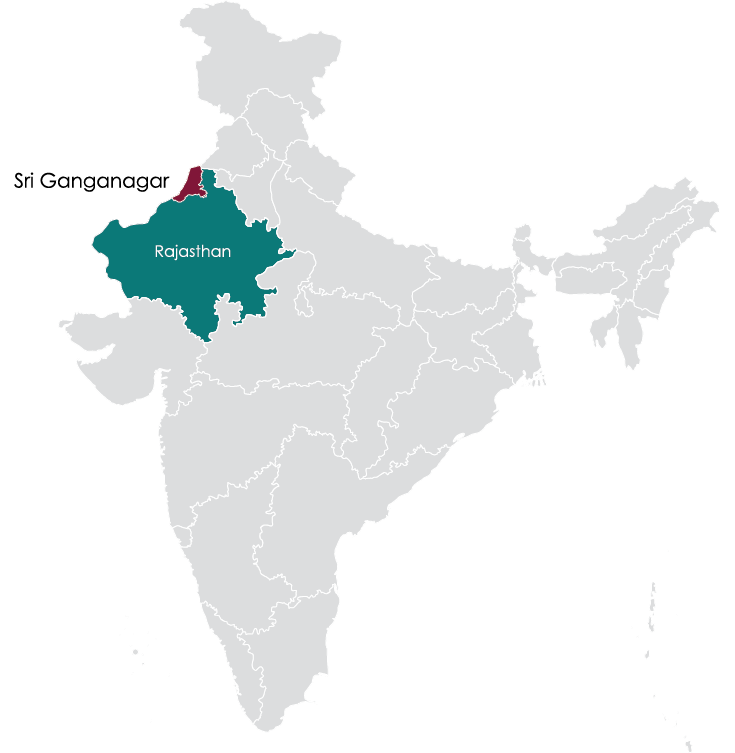
Over the past month the Mata Jai Kaur team has been busy conducting this year’s village visits. These visits are a continuation of last year’s MJK Mother’s Survey which had us visit the communities we serve, gather data to help with our planning and due diligence, and to let people know what we’re offering.

An early morning gathering before women were off to harvest the fields

An early morning gathering before women were off to harvest the fields

There was, however, a shift in emphasis this year. In addition to gathering data and learning about the lives of village women, the main focus of this year’s village visits was education. We wanted women in our area to know exactly what the risks of pregnancy are in Sri Ganganagar and what they can do to mitigate that risk. This effort is fundamental to our mission of ‘empowering women with knowledge’ – i.e. to increase their agency in the decisions that affect their chances of surviving childbirth.

We know from last year’s survey that there are many obstacles preventing women from getting quality care such as a lack of transportation options or money. Often, however, the biggest obstacle is simply that many families do not know why, when and from whom they should get medical care.

Our objective was to let women know why they should seek antenatal care and safe delivery and that there is a high-quality option at the Mata Jai Kaur Maternal and Child Health Centre.

The second main objective of this year’s village visits was to encourage community buy-in of our intervention. Getting the community invested in what we want to achieve – as various examples elsewhere demonstrate (see: Jamkhed, Asha and Bangladesh) – is vital to improving the maternal and child health outcomes. We used these village visits to identify potential Community Health Worker’s – women in villages who might work with us to improve the health of their communities. At our education sessions we noted names and contact information and invited interested women to attend the first Mata Jai Kaur Women’s Meeting that occurred last week (more on this seminal event in the next post).

For our MJK team the village visits were at once exhausting, exhilarating and edifying. The unforgiving springtime heat and occasional sandstorms – unleashed from the recently harvested wheat and barely fields – could not dampen our spirits as community after community welcomed us, listened and shared.

Arsh and Banth Bhaji talking to women

Arsh and Banth Bhaji talking to women

Our team for the visits consisted of Arsh and Sandhya (our champions from last year’s Survey), Sandeep – our very own student nurse and clinic volunteer – myself, and Balwant Kaler (aka Banth Bhaji) the MJK-MCHC’s tireless Managing Director.

Sandeep (left) after making a presentation

Sandeep (left) after making a presentation

On our last couple days we were joined by CJ – aka Christie James aka Santro Bhanji – from Canada who came up to the village to volunteer her time. It was a treat for the team and for the village women to have someone come from so far away to lend a hand.

Santro Bhanji and some new school friends

Santro Bhanji and some new school friends

Every village we visited was different and we managed to gather women in a variety of ways. Sometimes we’d visit a village school and have the students and teachers gather their mothers, aunts and sisters from home or the fields. Other times we’d make an announcement over the loudspeaker at the village Gurdwara (Sikh temple). We also took advantage of unexpected opportunities – people offering their houses as meeting venues, women gathering for a wedding event, even a travelling shoe sale (where we unsurprisingly found many women)! Often, we’d get village leaders to canvas households and find venues – we used this opportunity to inform them of what we’re doing and get them on board.

Once the women were gathered and introductions made we provided them with a very straightforward statistic: 343 out 100,000.

That’s the number of women in Sri Ganganagar who die per 100,000 live births, commonly referred to as the Maternal Mortality Ratio (MMR). Of course, to the women we were talking to the statistic in itself didn’t mean much, so we provided a comparison:

  • The state of Rajasthan as a whole as an MMR of 331/100,000
  • The neighbouring state of Punjab’s MMR is 192/100,000
  • Pakistan’s and India’s are 250/100,000
  • and Canada’s is 5/100,000

Sri Ganganagar is worse then all of them and virtually all of the women we talked to had no idea why this should be the case.

Aneel Brar_62 (17 of 20)

I could only imagine what went through the minds of the women we talked to, most of whom know someone who has died in childbirth, lost a child or had major complications during pregnancy. It was fascinating to watch our hosts consider that there exists a place like Canada where women do not suffer from the same preventable causes of death and illness that they suffer through. If it’s possible to get such a low maternal mortality rate in other places, why not in Sri Ganganagar? Why, indeed. The truth is that for almost everything that kills a mother in Rajasthan there exists simple, cost-effective and proven solutions. 

2013-05-03-3518 (9 of 20)

Major causes of death include obstetric emergencies like excessive bleeding, infection and eclampsia (convulsion and coma). In Canada and other developed countries where facilities and quality care is more accessible before and during pregnancy, the worst outcomes from such emergences can usually be prevented.

Other causes of poor maternal health outcomes in Ganganagar are related to certain behaviours. Nutritionally, almost all women in our region are anemic which puts both the mother’s and child’s life at risk. While talking about nutrition Banth Bhaji challenged the men and women listening to think about whether it’s right for a women to eat last and save expensive fruits (important sources of iron) for others in the household, as is usually is the practice in our region. Coming from an older Sikh man – not the type of person these women would expect to get the message from – the observation resonated. The women nodded their heads in agreement as Banth Bhaji subtly challenged the prevailing gender and power dynamics of village life that directly affect maternal and child health.

Aneel Brar_240 (1 of 1)

He went even further when he challenged the women on two other common behaviours – sex-selective abortion and early marriage. Abortion for any reason other than medical necessity is illegal in India, and for good reason. For many cultural and societal reasons girls are valued less than boys and pregnant women will often have female fetuses aborted. Since the abortion and sex-determination (i.e. with ultrasound) is illegal the entire industry is pushed underground and is enormously risky for the mother.

Aneel Brar_102 (1 of 1)

Girls getting married early – often before the age of 15  in our area – is another huge risk. Younger brides tend to have underdeveloped pelvises that are not yet able to handle childbirth – early pregnancy endangers them and their unborn children.

Aneel Brar_244 (20 of 20)

Banth Bhaji pinpointed exactly what needs to change for both sex-selective abortion and early marriage to end: the true value of girls needs to be recognized. Banth Bhaji would often point to the young ladies on our team – Arsh, Sandeep, Sandhya and CJ – as prime examples of what an educated girl can bring to a family and to society. He’d also point out the female teachers in the village schools we were visiting. Sometimes he’d get pushback – usually from women themselves who struggle with what they perceive as the economic burden a girl can represent for a family in the form of dowries and inheritance – but this opened the door for more discussion and debate – something Banth Bhaji was more than happy to engage in.

In witnessing these debates I learned of the immense value that discussion and an exchange of knowledge can foster. We learned a lot from the women we met as they did form us. I also learned that in Banth Bhaji we have a tireless champion for women’s rights and women’s health. As far as finding local leaders in maternal and child health, we couldn’t have found someone better!

Banth Bhaji and Sandhya

Banth Bhaji and Sandhya

Stay tuned for more on our first MJK Women’s Meeting.

@aneelbrar

Life in Ganganagar part 1 – Holi!

28 Mar

IMG_1807 (4 of 8)

Here in Ganganagar, the mustard crops are being harvested and the wheat and barley are about to turn the landscape from green to gold. Everybody’s hard at work in the fields trying to get as much done before the weather turns unbearably hot. Spring is here, which means it’s time for Holi – the festival of colours!

In 35BB – the village where our hospital is located – children took advantage of their day off from school to have some fun. One can never hide from a Holi fight for too long, and sure enough a bunch of local boys showed up at the hospital with their colours in hand.

Here are some pictures from the day. This will be the first in a series of posts on the life and people in and around 35BB – the community we’re serving. Stay tuned for more coming soon.

(Make sure you scroll to the end to see the unexpected guest that joined the festivities!)

IMG_1789 (8 of 8)

IMG_1801 (1 of 8)

IMG_1793 (6 of 8)

IMG_1790 (7 of 8)

IMG_1821 (5 of 8)

Unexpectedly, a snake – up from its winter slumber – came by the hospital. Snakes in India are a big deal because they are all poisonous. Apparently, Rajasthan is known for having lots of them, but it took me a year-and-a-half to finally see one for real (though they’ve undoubtedly been around just out of sight).

The snake was a baby and none of us were in danger because our fearless caretaker, Baba Amar, took care of it.

IMG_1831 (2 of 8)

Baba Amar is one of the bravest people I have ever met.

IMG_1834 (3 of 8)

This wasn’t the first time Baba Amar has shown his bravery – in an upcoming post involving a dog rescue, you’ll see what I mean!

From everyone at the Mata Jai Kaur Maternal and Child Heath Centre (MJK-MCHC) and the Prominent Homes Charitable Organization (PHCO), we wish you a very happy Holi. 

@aneelbrar

International Women’s Day!

8 Mar


660px-Frauentag_1914_Heraus_mit_dem_Frauenwahlrecht

There’s been a bit of a hiatus on the MJK blog – I apologize for the lack of new material lately. But the lack of updates on the blog doesn’t mean that things haven’t been moving behind the scenes here in Rajasthan. 2013 is going to be a momentous year for the MJK-MCHC as we move in earnest towards building our organization and affecting the kind of change we’d like to see in the community.

Stay tuned for more updates very soon.

In the meantime, I’d like to take a moment to commemorate two very special women. In following excerpt from our 2012 Annual Report, we profile the two women that have inspired the work we’re doing in Ganganagar, Rajasthan – Mata Kartar Kaur and Mata Jai Kaur.

On this International Women’s Day, may you remember all the great women that have influenced your life. To all the mothers, daughters and sisters out there – Happy International Women’s day!

Our motivation; our agents of change

The motivating force behind our project comes from two women- Mata Kartar Kaur and Mata Jai Kaur (“Mata” is a respectful term meaning “mother”). Their story epitomizes the struggle that many women in Ganganagar still endure. Their triumph through tragedy has traversed oceans and continents and has now returned to where their story began. In our family’s history, these two women stand out as our agents of change.

MATA KARTAR KAUR

Mata Kartar Kaur

Mata Kartar Kaur

Mata Kartar Kaur, after whom our prenatal clinic is named, gave birth to nine of her ten children in a small, mud-walled house on the very spot that our clinic now stands. Due to unhygienic conditions & unsafe delivery techniques she contracted puerperal fever, or childbirth fever, and died soon after giving birth to her last child, Baldev (Deep) Shergill, founder and President of Prominent Homes Ltd. (a home builder in Calgary, AB, Canada) and the Prominent Homes Charitable Organization (PHCO).

Although Kartar Kaur died young, her influence on her children’s future was tremendous. At a time when literacy and education were not highly valued, especially for girls, Kartar Kaur ensured that her children could read and write. The value for education she instilled in her family paved the way for brighter futures in Canada and United States. Through her strength and independence of spirit, Kartar Kaur also resisted significant social pressures for sex-selection. In a society that greatly valued boys over girls, Kartar Kaur ensured that all five of her daughters survived childhood to become loving and supportive mothers themselves.

Kartar Kaur died at the age of 40 in 1956 from a preventable condition. Indeed, many of the risks that Kartar Kaur faced while giving birth to her ten children continue to threaten the wellbeing of mothers in Ganganagar and across the developing world.

The major causes of maternal death are severe bleeding and hemorrhage, infections, unsafe abortions, eclampsia (seizures or coma that occur during pregnancy) and other complicating issues like anemia and malaria (both of which are common in Rajasthan). All of these risks are avoidable and any deaths they cause are unnecessary.

Our organization is a reflection of Kartar Kaur’s love and sacrifice and is dedicated to the health and wellbeing of the women of Ganganagar.

MATA JAI KAUR

Mata Jai Kaur

Mata Jai Kaur

After Kartar Kaur’s death the responsibility for caring for her newborn child passed to her mother-in-law – Deep’s grandmother – Mata Jai Kaur. Jai Kaur was 85 years-old at the time and dutifully continued working in the cotton and wheat fields, preparing food and managing other household chores while caring for her newborn grandchild.

In many ways, Mata Jai Kaur’s life reflects the struggles that
women continue to face in many parts of India and the developing
world. She was forced to marry young, denied opportunities for
education and lived a life of servitude. Her responsibilities as a
young women included hauling drinking water over long
distances through Rajasthan’s scorching summers and freezing
winters. Like Kartar Kaur, Jai Kaur faced the many health-risks
associated with early pregnancy in an environment that lacked
reproductive health services. Many poor families in Ganganagar
 still marry their children young, which increases the likelihood of early pregnancy and its associated health risks.

Fortunately, Jai Kaur survived to live a long time. She passed away in 1976 at the age of 105 and in the process had a direct and profound influence on three generations of her family. For her children, grandchildren and the great grandchildren Jai Kaur remains an everlasting spring of inspiration and love that makes the Mata Jai Kaur Maternal and Child Health Centre possible.

In development discourse it is well established that women can play a central role in lifting their families out of poverty. Together, Mata Kartar Kaur and Mata Jai Kaur embodied this notion of women as agents of change. They planted a seed that bloomed around the world and that has come back to Ganganagar through MJK-MCHC.

@aneelbrar

Calgary Sun article

24 Sep

This is a guest post written by Lauren Barr of the Calgary Sun. The article was originally published in the Sun on Saturday, September 8th, 2012. Published with permission of the Calgary Sun.

Prominent Homes helps bring crucial care to India

CALGARY, AB - A charitable endeavour by Prominent Homes is making powerful differences across the globe.

Prominent Homes Charitable Organization began an ambitious project several years ago in Ganganagar, Rajasthan, a poor state in northwest India, where Prominent Homes’ president, Deep Shergill, grew up.

The project is a clinic, Mata Jai Kaur Maternal and Child Health Centre, which helps improve the quality of life, health and safety of women and children.

“The area is very poor and desert-like, one of the least developed areas in the world,” says Aneel Brar, chief operating officer of Mata Jai Kaur and nephew to Shergill.

“There are many problems with the health system in the rural areas, such as problems with access and hygiene. For women bearing children, they have difficulty getting to a safe place to deliver and less than half of the pregnant women have safe deliveries.

“My grandmother died there in childbirth in 1946 and not many improvements have been made to the system since then.”

In 2009, Prominent Homes Charitable Organization opened the prenatal clinic, named after Brar’s grandmother Mata Jai Kaur. The clinic provides health services to women wanting to conceive or who are pregnant, even young girls entering puberty.

“The clinic is able to provide basic services like folic acid and nutritional supplements to pregnant women, as well as providing delivery services,” Brar says. “Women are able to get the highest quality of care for free.”

With 343 maternal deaths per 100,000 live births, and an infant mortality rate of 60 deaths per 1,000 children under one year of age in Ganganagar, the care is necessary.

The prenatal clinic is built in a village, not a city or town, which improves access for those in rural areas and has the added benefit of not being adjacent to overcrowding and pollution.

Mata Jai Kaur is treating 80 to 100 women every week and wants to expand even further.

“What we would like to do now is provide after-delivery care,” Brar says.

“Many women don’t get post-partum checkups and can suffer from fever and infections. It can also decrease the rate of infant deaths.

“Our goal is to improve the health outcomes of women and children in this impoverished area. Most maternal and child deaths are unnecessary and we want to address these issues.”

The Mata Jai Kaur Maternal and Child Health Centre is 100% funded by Prominent Homes.

Lauren Barr

Note: The above text contains some factual errors: The project is not just a prenatal clinic (that’s part of it), but a full-service maternal and child health centre. Mata Kartar Kaur, my grandmother, died in 1956, not 1946. Our prenatal clinic, part of the overall Centre, was named after my grandmother Mata Kartar Kaur whereas the entire Centre is named in memory of my great-grandmother, Mata Jai Kaur. Despite these mistakes we thank the Calgary Sun for highlighting our project!

@AneelBrar

The MJK-MCHC Annual Report 2012

22 Aug

MJK-MCHC Annual Report 2012

It’s with great pleasure that I’m finally able to share MJK-MCHC’s first Annual Report, covering the years 2009-2012.

This document has been a year in the making and involved a lot of collaboration with many capable people. I’m grateful for everyone’s help and hard work.

In the report you’ll find information on what’s been going on over the past three years in 35BB. You’ll also find information on our plans for the future and, most importantly, our newly established vision and mission statements.

To get our full report, click on the image above.

(For an even higher resolution version go here)

@aneelbrar

Aneel@prominenthomes.ca

MJK-MCHC 2012 – video

18 Jul

Since I arrived in India a year ago I’ve been shooting videos to eventually produce a short documentary showcasing our work. I’m happy to present the final cut above.

For me, the most satisfying part of making this video was sharing some of the experiences we had during our village visits back in March and April. I also think the video, much more than any words I’ve written, captures a bit of the sentiment behind the project. We are not disinterested practitioners. Rather, we are fully invested in this community with the hopes of planting the seeds of change. This sentiment is born of the love of Mata Kartar Kaur and Mata Jai Kaur (more to come on this topic).

This video is meant to accompany our first Annual Report, which will have more detailed information on our operations and plans, and which will be released shortly. Anyone who wants a copy of the report can send me a message (email: aneel (dot) brar (at) gmail (dot) com) — I’ll be happy to send it to you.

I’d also love to hear what you think of the video or anything else! Your comments, questions and thoughts are most welcome.

@AneelBrar

Healthy mothers, healthy babies

23 Jun

Here’s a guest post about our project written by Sadhna, an intern at the Canadian High Commission in Delhi. The article was originally published on the High Commission’s “Canada in India” Facebook page. Apparently, I’m still a ‘youth’ — but maybe they’re referring to Sherri!

Healthy mothers, healthy babies: Calgary youth’s dream project

by Canada in India (High Commission of Canada) on Tuesday, 5 June 2012 at 17:46 ·

A Canadian youth has launched a hospital project in an economically-challenged village of Rajasthan that will provide excellent pre and post natal healthcare to local women. The project aims to address high infant and mortality rates, the skewed sex ratio and lack of access to medical facilities for poor patients.

An infant mortality rate of 65 deaths per 1000 live births… A maternal mortality rate of 388 deaths for 100,000 live births… a sex ratio of 861 girls to 1000 boys… deliveries conducted in unhygienic conditions… inadequate facilities for pre and post natal check-ups. These are some of the statistics from the Ganganagar district of Rajasthan. But instead of shaking his head at this challenging reality, a Canadian youth decided to take some concrete steps to improve these conditions.

Mr. Aneel Brar, a post-graduate in political science from McGill University, alongwith his cousin Sherri Shergill, set up a clinic in village 35BB of Ganganagar district. The clinic provides modern and hygienic conditions for treatment and check-ups of expectant mothers and new born babies. The clinic is a precursor to Mata Jai Kaur Hospital (MJKH), named in memory of Mr. Brar’s great-grandmother. Mr. Brar’s grandmother passed away while giving birth to her tenth child. This child, Baldev Shergill, who is also Mr. Brar’s uncle, later migrated to Canada with his brothers and sisters but never forgot the need for medical facilities in his hometown. Mr. Shergill set up the Prominent Homes Charitable Organisation which has provided initial funding for MJKH. Armed with this initial investment from his uncle, Mr. Brar has set out on a mission to improve the maternal and child healthcare facilities in Ganganagar district.

“I have visited a number of hospitals in Ganganagar, and noticed that the treatment meted out to poor patients is different from that received by the rich patients.” This pained Mr. Brar as the poor were left with no access to good healthcare. He is determined to address this issue at MJKH. “We are trying to come up with a fee structure where treatment can be subsidized for poor patients,” says Mr. Brar.

At present, the clinic caters to about 80 patients a week and is manned by Dr. Renu Makker, Nurse Balkeesh Banu and chemist Rajesh Kumar. All three share Mr. Brar’s vision and are passionate about their work. The hospital’s reputation is slowly spreading by word of mouth as patients who come here are assured quality care. The number of patients has almost doubled since the hospital started in 2010.

There are big plans for the hospital’s expansion. Mr. Brar aims to have a permanent team of doctors and other allied staff at the hospital. He also plans to invite specialists from Canada who will bring with them the latest know-how from the medical world. Recently, Dr. Hillary Lawson, a Canadian physician currently living and practising in Delhi, spent a day at MJKH, treating patients.

Mr. Brar also plans to educate the local people about the necessity of pre and post natal care, the importance of hygiene and hospital deliveries. He also aims to improve the sex ratio in the district by educating parents and spreading awareness. His aim is to assist the Government of Rajasthan in its goal of health for all.

“My goal is make quality healthcare accessible to all. The required technology is available in India and we plan to use it for everyone’s benefit”, says Mr. Brar.

By the end of next year, he plans to expand the hospital so that all facilities are provided at one place.

Here’s wishing Mr. Brar every success in his healthcare mission.

Read more about Mata Jai Kaur Hospital:

http://prominenthomescharity.wordpress.com/

http://www.facebook.com/notes/canada-in-india-high-commission-of-canada/healthy-mothers-healthy-babies-calgary-youths-dream-project/404743989578241